Beyond HRT: Proven Dietary and Lifestyle Changes for Menopause Symptom Relief
Understanding Menopause and Night Sweats
Menopause is a natural biological process that every woman experiences as she ages. While it marks the end of fertility, it often brings along a series of physical changes and symptoms that can affect daily life and overall well-being. Among the most disruptive of these symptoms are night sweats—sudden and intense episodes of heat and perspiration that disturb sleep. These episodes, driven by hormonal fluctuations, can lead to chronic fatigue, irritability, and reduced quality of life.
The Role of Hormones in Temperature Regulation
The decline in estrogen levels during menopause disrupts the body’s ability to regulate temperature, leading to these heat surges. While medical treatments like hormone replacement therapy (HRT) are effective for some women, they are not suitable for everyone due to potential health risks. This has driven increasing interest in alternative strategies, particularly dietary and lifestyle changes.
Introduction to Natural Management Strategies
In this article, we explore evidence-based dietary adjustments and practical lifestyle changes to manage menopausal night sweats. By integrating these strategies into daily routines, women can mitigate the severity and frequency of symptoms while improving their overall health.
Understanding Soy and Isoflavones Benefits
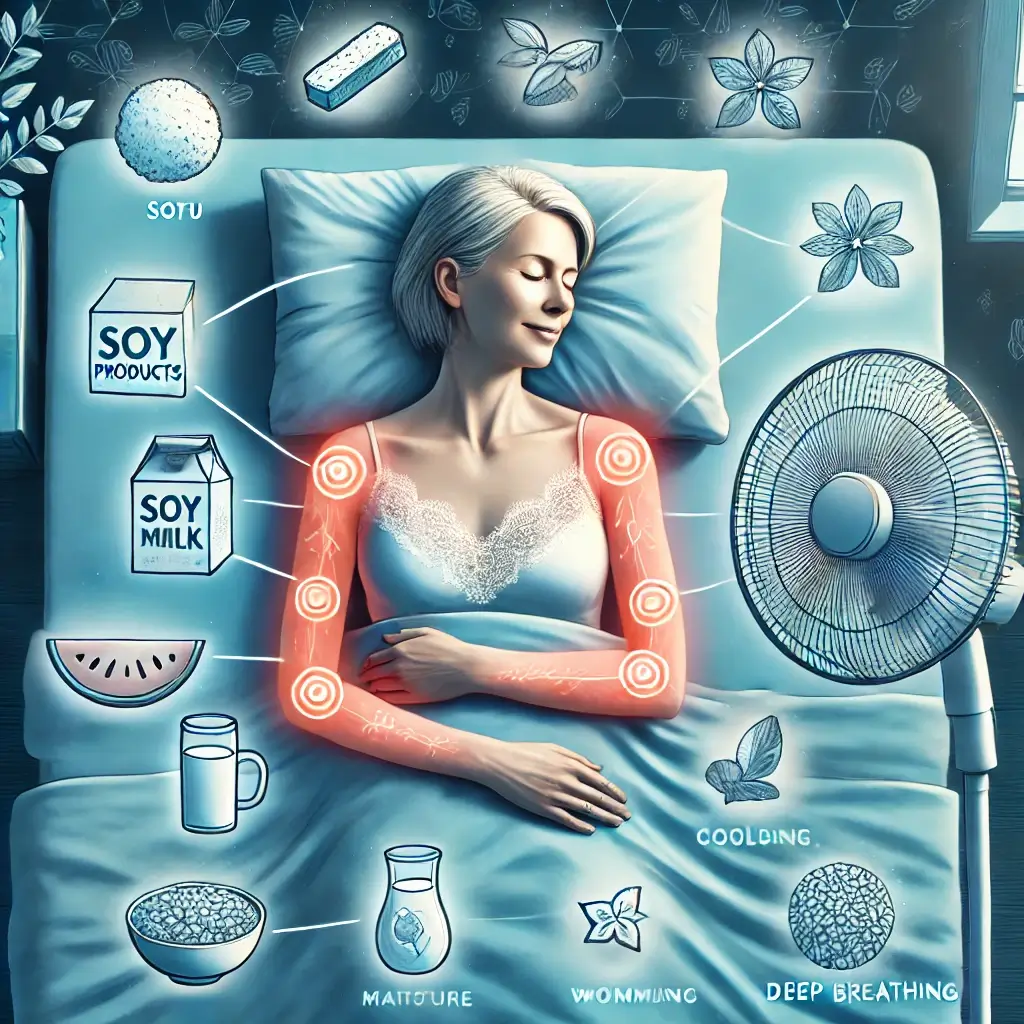
Soy products such as tofu, soy milk, and edamame are rich in isoflavones, plant compounds that mimic estrogen in the body. A 2016 review in Maturitas evaluated the role of soy in managing menopausal symptoms and found that it may help reduce the frequency of hot flashes and night sweats. The evidence, while promising, varies across studies, suggesting that the benefits may depend on individual factors like gut microbiota, which affects isoflavone metabolism (Messina, 2016).
The Power of Flaxseeds
Flaxseeds are another dietary source of phytoestrogens called lignans. While research is limited, some studies suggest that consuming flaxseeds can reduce the severity of hot flashes and night sweats. Flaxseeds also offer additional health benefits, such as improved heart health and digestion.
Importance of Hydration and Cooling Foods
Staying well-hydrated and consuming cooling foods, such as cucumbers and watermelon, can help regulate body temperature. Dehydration can exacerbate night sweats, making adequate water intake an essential part of symptom management.
Managing Dietary Triggers
Certain foods and beverages, such as caffeine, alcohol, and spicy foods, are known to trigger hot flashes and night sweats. Avoiding these items, especially in the evening, can help reduce the frequency and intensity of symptoms.
Creating an Optimal Sleep Environment
Creating a cool and comfortable sleeping environment is crucial for managing night sweats. Use breathable, moisture-wicking fabrics for bedding and sleepwear, and keep the bedroom temperature cool with fans or air conditioning.
Benefits of Physical Activity
Exercise is a cornerstone of healthy living and can significantly impact menopausal symptoms. A study published in Menopause found that women who engaged in regular physical activity reported fewer and less severe hot flashes and night sweats. Activities like walking, swimming, and yoga are particularly effective for reducing stress and improving overall health.
Managing Stress During Menopause
Stress is a common trigger for night sweats. Incorporating relaxation techniques such as mindfulness, meditation, or deep breathing exercises into your daily routine can help manage stress levels and reduce the occurrence of night sweats.
Importance of Sleep Hygiene
Maintaining good sleep hygiene can minimize the impact of night sweats. Establishing a consistent sleep schedule, avoiding screen time before bed, and using blackout curtains can promote better rest despite nighttime disruptions.
Individual Variations in Treatment Response
While dietary and lifestyle changes offer a holistic approach to managing menopausal night sweats, it’s essential to consider individual differences. The effectiveness of these strategies can vary based on factors like genetics, existing health conditions, and personal habits. Consulting with a healthcare provider or a nutritionist can help tailor a plan that meets your specific needs.
Setting Realistic Expectations
Additionally, it’s important to set realistic expectations. These interventions may not eliminate night sweats entirely but can significantly reduce their frequency and intensity when used consistently.
Comprehensive Management Approach
Menopausal night sweats can be a challenging symptom, but they are manageable with the right approach. Dietary adjustments, such as incorporating soy and flaxseeds, and avoiding known triggers like caffeine, can help alleviate symptoms. Complementing these dietary changes with practical lifestyle modifications, including maintaining a cool sleep environment, staying active, and managing stress, can further enhance relief.
Empowerment Through Knowledge
Empowering yourself with knowledge and seeking guidance from healthcare professionals ensures that these strategies are both safe and effective. By integrating these natural approaches, women can navigate menopause with greater comfort and confidence, reclaiming restful nights and improved quality of life.
References
Messina, M. (2016). Soy and health update: Evaluation of the clinical and epidemiologic literature. Maturitas, 86, 332-338.
Daley, A., Stokes-Lampard, H., & MacArthur, C. (2011). Exercise to reduce vasomotor and other menopausal symptoms: A review. Menopause, 18(6), 744-752.