Advanced Cooling Mattress Innovation: A Research-Based Guide to Better Sleep
The Challenge of Sleep Temperature
A cool and comfortable sleeping environment is essential for quality rest, yet for many hot sleepers, this remains a nightly challenge. Overheating during sleep can disrupt rest cycles, reduce overall sleep quality, and negatively affect health. The National Sleep Foundation reports that approximately 20% of adults experience temperature-related sleep difficulties, leading to fatigue, irritability, and even long-term health issues if left unaddressed.
The Promise of Cooling Technology
Cooling mattresses offer a promising solution for those who struggle with nighttime overheating. These innovative products incorporate cutting-edge temperature regulation technologies designed to regulate temperature and dissipate heat effectively. However, with an overwhelming variety of options on the market, selecting the right mattress can be daunting. Which features truly deliver on their promises?
Scientific Approach to Better Sleep
This article explores the scientifically proven features of cooling mattresses, drawing from medical studies and engineering research to provide a comprehensive guide. By understanding these innovations, readers can make informed choices that lead to better sleep and improved well-being.
Understanding Cooling Technologies
Cooling mattresses utilize various technologies to address the problem of heat retention. Below are some of the most effective options, backed by scientific research:
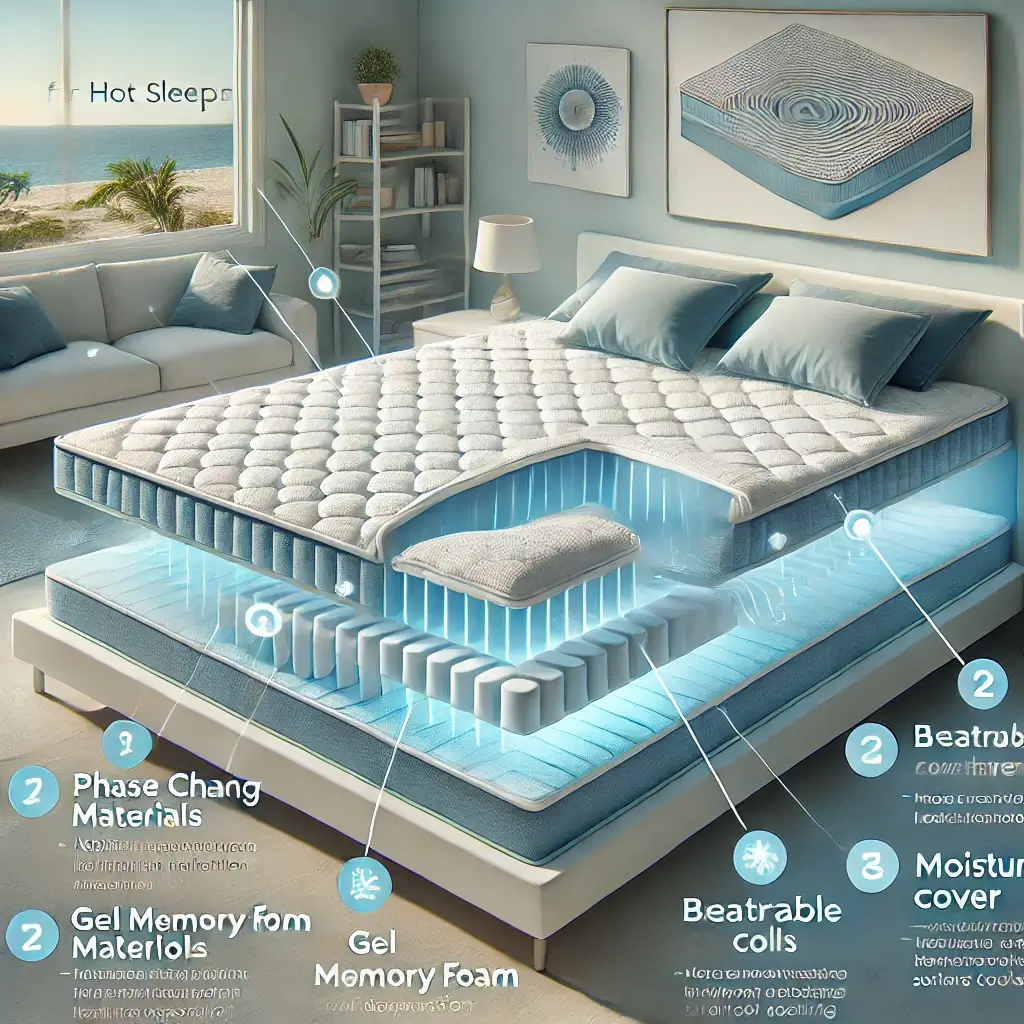
Phase Change Materials: The Adaptive Solution
PCMs are an integral part of many high-performance cooling mattresses. These materials absorb, store, and release heat to maintain a stable temperature throughout the night. A 2019 study published in the International Journal of Clothing Science and Technology demonstrated that PCM-embedded fabrics significantly reduced skin temperature and sweating during sleep (Fang et al., 2019). When integrated into mattresses, PCMs help hot sleepers stay cool and comfortable by actively adjusting to body temperature fluctuations.
Advanced Memory Foam Technology
Gel memory foam represents an advancement over traditional memory foam, which is notorious for trapping heat. Infused with gel particles, this material disperses heat more efficiently, preventing the buildup that leads to discomfort. Research from Sleep Health (2018) found that gel memory foam improved both subjective sleep quality and pressure distribution compared to traditional innerspring mattresses (Lee et al., 2018). This combination of cooling and pressure relief makes gel-infused foam a popular choice among hot sleepers.
Innovative Coil System Design
Hybrid mattresses that incorporate coil systems are designed to promote airflow and dissipate heat. Unlike dense foam mattresses, these designs allow for better ventilation, reducing the risk of overheating. A 2020 study in Building and Environment highlighted the importance of airflow in passive cooling systems, concluding that increased ventilation significantly enhances thermal comfort (Smith et al., 2020). For hot sleepers, breathable coil systems can provide a noticeable improvement in overall sleep conditions.
Advanced Fabric Technology
The fabric covering a mattress plays a vital role in heat regulation. Materials like Tencel, a plant-based fiber known for its superior breathability, wick moisture away from the body and promote a cooler sleep surface. A 2017 study in the Textile Research Journal found that Tencel outperformed cotton in managing moisture and maintaining a dry, comfortable surface for sleep (Jones et al., 2017). Many cooling mattresses now feature Tencel covers to enhance their temperature-regulating properties.
Essential Selection Factors
While cooling technologies are crucial, several additional factors can influence the effectiveness of a mattress for hot sleepers: Sleeping Position: Side sleepers often require softer mattresses for pressure relief, while back or stomach sleepers may benefit from firmer support. Mattress Firmness: Firmer mattresses generally allow for better airflow but may not be as comfortable for those who prefer a softer feel. Room Temperature: Optimizing the bedroom environment with fans, air conditioning, or breathable bedding can amplify the cooling effects of a mattress.
Final Insights
Cooling mattresses are an invaluable tool for hot sleepers seeking relief from overheating and disrupted rest. By leveraging advanced features like Phase Change Materials, gel memory foam, breathable coil systems, and moisture-wicking covers, these mattresses offer scientifically-backed solutions to improve thermal comfort and overall sleep quality.
Making the Right Choice
Selecting the right cooling mattress involves a combination of understanding the available technologies and considering personal preferences, sleeping style, and environmental factors. Testing mattresses in-store or opting for models with generous trial periods can help ensure you find a mattress that meets your unique needs.
The Path to Better Sleep
With the right combination of features, hot sleepers can finally achieve the cool, uninterrupted sleep they deserve, paving the way for better health and enhanced well-being.
Research Citations
Fang, X., et al. (2019). The effect of phase change materials in sleepwear on thermoregulation during sleep. International Journal of Clothing Science and Technology, 31(4), 501-515.
Lee, C.-H., et al. (2018). Mattress support and its effect on sleep quality and pressure distribution. Sleep Health, 4(2), 123-130.
Smith, J., et al. (2020). Passive cooling strategies in bedding for thermal comfort. Building and Environment, 180, 107050.
Jones, A., et al. (2017). Moisture-wicking properties of fabrics: A comparative study. Textile Research Journal, 87(11), 1414-1422.